Audix: 40+ Years of Pro‑Grade Microphone Innovation
Founded in 1984, Audix set out with a clear mission: to build microphones engineered and manufactured to the highest professional standards. From its humble Redwood City beginnings to its modern 78,000 sq ft facility in Wilsonville, Oregon, Audix has earned a reputation for rugged construction, exceptional sound quality, and accessible pricing. Today, touring artists, stage engineers, worship venues, and recording studios alike rely on Audix to deliver reliable performance and clarity night after night.
Over four decades, Audix’s pioneering technologies — most notably its signature VLM (Very Low Mass) diaphragm design — and its enduring commitment to build quality have transformed what working musicians and live‑sound professionals expect from a mic. Whether for vocals, drums, instruments, or broadcast, Audix remains a go‑to name for trusted, stage‑ready sound reinforcement.
From Humble Beginnings to Pro Audio Mainstay
The Early Days — 1984 to 1986
Audix was founded in 1984, originally operating out of Redwood City, California, with the ambition of producing high‑quality microphones for the pro audio and music markets. :contentReference[oaicite:1]{index=1} In 1986, Audix launched its first professional vocal microphone, the OM1. That first model quickly gained attention — praised in magazine reviews and adopted by working musicians for its superior sound quality and resistance to feedback compared with mainstream vocal microphones. :contentReference[oaicite:3]{index=3}
Innovation with VLM: Redefining Mic Capsule Design
In 1991, Audix moved its operations to Wilsonville, Oregon, where R&D, manufacturing, assembly, testing, and logistics are now consolidated under one roof. :contentReference[oaicite:4]{index=4} Around that time, Audix introduced its defining technical innovation: VLM (Very Low Mass) diaphragm capsules. These ultra‑light diaphragms allowed far faster transient response, improved accuracy, extended frequency response and high SPL handling—a major step forward over many existing dynamic microphones. :contentReference[oaicite:5]{index=5}
The Vocal Mic Revolution & On-Stage Dominance
By the mid‑’90s, as the national live music scene boomed — driven in part by the grunge movement emerging from nearby Seattle — Audix vocals mics became prized for their ability to hold gain before feedback on loud stages. :contentReference[oaicite:6]{index=6} One of the most iconic models, the OM7, became legendary for its hyper‑cardioid pattern, feedback resistance, clarity and rugged build. On historically loud tours and festival stages, it provided vocalists and front‑of‑house engineers with the confidence to crank monitors without sacrificing tone. :contentReference[oaicite:8]{index=8}
In fact, Audix mics quickly found their way onto stage with top‑tier artists and varied genres — from rock and grunge to country, folk, and worship. Because Audix did not rely heavily on paid endorsements but instead let their gear speak for itself, many artists and engineers purchasing the microphones at full price helped spread their reputation organically. :contentReference[oaicite:9]{index=9}
Expanding the Lineup — Instruments, Drums, and Studio Use
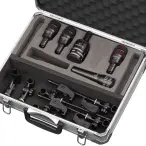
With vocal mics firmly established, Audix broadened its lineup. The “D Series” drum and instrument microphones — including snare, toms, bass drum, and more — gained rapid adoption among drummers and live‑sound crews seeking application‑specific miking solutions. :contentReference[oaicite:10]{index=10} The company also addressed studio and broadcast needs, offering condenser and pencil‑style mics for recording instruments, vocals, or ambient sound. :contentReference[oaicite:11]{index=11}
The Modern Era: Still Built in Oregon, Still Innovating
As of 2024, Audix celebrated its 40th anniversary — marking four decades of continuous operation and growth. :contentReference[oaicite:12]{index=12} Their Wilsonville facility now houses full R&D, manufacturing, and quality‑control operations, allowing new developments to flow from design to testing to production under tight tolerances. :contentReference[oaicite:13]{index=13}
Even now, the brand continues to evolve: new mic series, modernized designs, and updated construction techniques demonstrate Audix’s commitment to supporting today’s musicians, engineers, houses of worship, touring acts, and more — all while honoring the legacy of reliability and performance that built their reputation. :contentReference[oaicite:14]{index=14}
Why Professionals Still Trust Audix
- Proven reliability: decades on stage, in studios, and on tour with minimal failures.
- Consistent sound quality: VLM diaphragms and tight engineering standards deliver clarity and accurate reproduction.
- Purpose‑built versatility: microphones engineered for vocals, drums, instruments, broadcast, or installed sound — all under the same brand umbrella. :contentReference[oaicite:15]{index=15}
- American manufacturing heritage: with core operations still based in Wilsonville, Audix maintains control over design, quality, and production continuity. :contentReference[oaicite:16]{index=16}
Notable Products — From OM Mics to Drum Packs
Among Audix’s most celebrated microphones: the OM series for vocals — including OM1, OM3, OM5, and the OM7 — which raised the bar for live‑sound performance in the 1990s and beyond. :contentReference[oaicite:17]{index=17} For kick drums and low‑frequency instruments, the D6 remains a go‑to choice, widely respected for its punchy, natural low end and reliability