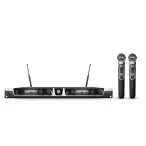
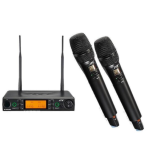
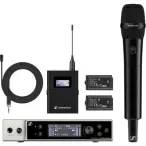
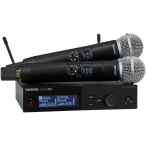
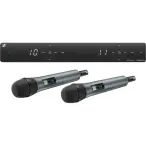
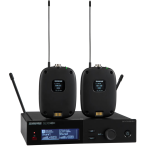
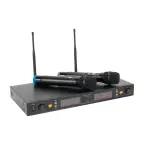
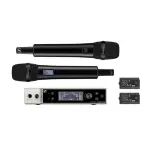
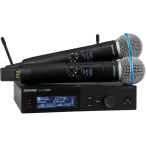
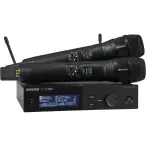
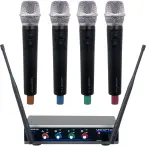
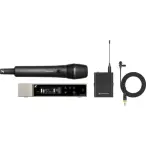
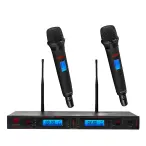
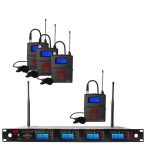
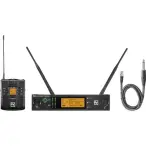
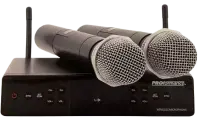
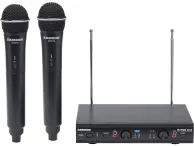
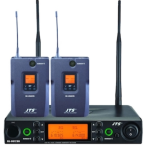
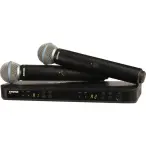
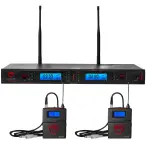
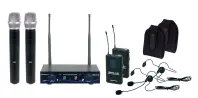
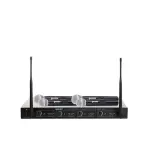
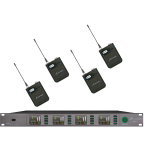
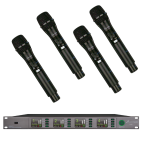
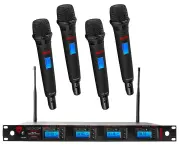
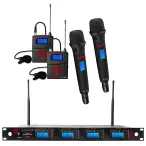
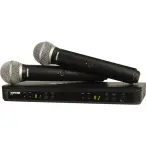
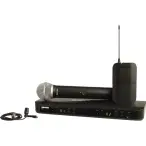
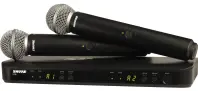
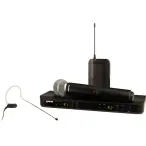
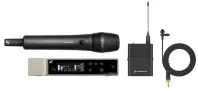
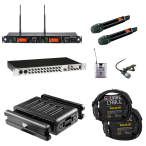
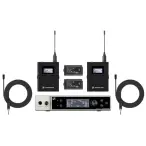
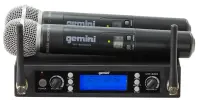
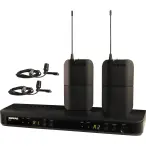
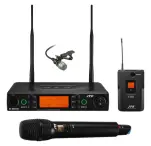
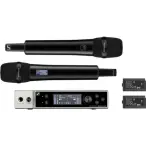
Multi-Channel Wireless Microphone Systems
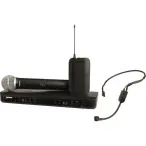
Multi-channel wireless microphone systems make it easier to operate two, four, or more microphones in the same room without filling a rack or equipment case with separate receivers and power supplies. They are ideal for mobile DJs, wedding ceremonies, corporate presentations, houses of worship, schools, theaters, bands, and production companies that regularly need multiple wireless handheld, headset, or lavalier microphones.
A properly selected multi-mic wireless system also simplifies frequency coordination, audio connections, setup, and troubleshooting compared with combining several unrelated single-channel units. Frequency availability varies by location, so the correct operating band remains essential. KPODJ can help you choose a dependable multi-channel wireless microphone system with the right channel count, transmitter types, frequency range, and expansion capabilities for your events.
Why Choose a Multi-Channel Wireless Microphone System?
Running several single-channel wireless receivers can work, but it often creates unnecessary complexity. Every receiver may require its own power supply, antennas, rack space, audio cable, and frequency setup. A dual-channel or four-channel wireless microphone system consolidates those connections into a cleaner, more manageable package. This is especially valuable for mobile entertainers and production professionals who need to set up quickly, conserve space, and reduce the number of components that can be misplaced or incorrectly connected.
Multi-channel receivers also make it easier to monitor several microphones from one location. Depending on the system, users may be able to view channel status, audio levels, battery information, frequencies, and mute conditions across one receiver. Coordinated systems are generally easier to scan, synchronize, and organize than a collection of unrelated wireless mics purchased at different times.
Fewer Power Supplies, Antennas, and Rack Connections
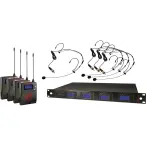
One of the most practical advantages is equipment consolidation. A dual receiver can operate two transmitters from one chassis, while a four-channel receiver can place four complete wireless channels in a single rack space. Compared with installing four independent receivers, that can significantly reduce wiring, setup time, and rack congestion.
The audio outputs can also be easier to manage. Many multi-mic systems provide individual outputs for each microphone, allowing separate mixer channels and independent equalization. Some include a mixed output for simpler applications. For professional work, KPODJ generally prefers individual outputs because they give the operator better control over each vocalist, speaker, officiant, or presenter.
Frequency Coordination for Multiple Wireless Mics
Frequency selection becomes increasingly important as the microphone count grows. Two systems that operate well individually can interfere with one another when used together if their frequencies are not compatible. Wireless operators must account for local television stations, nearby venues, other event equipment, and intermodulation created by multiple transmitters operating in the same area.
A coordinated multi-channel wireless system is designed to make this process easier. Preset frequency groups, automatic scanning, infrared synchronization, and manufacturer-tested compatible channels can reduce setup time and uncertainty. However, automatic features cannot compensate for purchasing the wrong frequency band for a particular region. KPODJ representatives can help evaluate the available bands for your area before recommending a system.
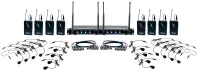
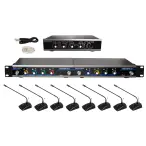
For productions that may expand, it is also important to consider how many compatible channels a platform can support—not simply how many microphones are included in the original package. A dual system may be perfect for a wedding DJ, while a theater, church, school, or production company may benefit from a system designed to coordinate many receivers in the same room.
JTS Multi-Channel Wireless Systems
JTS wireless microphones are among KPODJ’s favorite values for multi-channel applications. Although the JTS name may be less familiar to some buyers, the company is a major microphone manufacturer with extensive experience producing professional microphone technology. In our opinion, buying JTS is similar to purchasing closer to the factory: customers receive substantial RF performance, construction quality, and functionality without paying primarily for a highly marketed brand name.
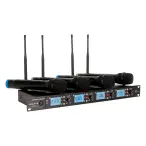
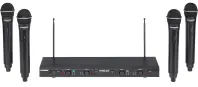
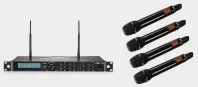
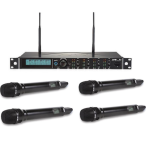
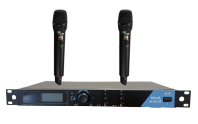
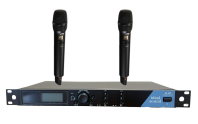
The JTS IS-R2/JSS-4B combines two wireless handheld microphones with a dual-channel receiver, making it a strong choice for ceremonies, speeches, karaoke, and mobile entertainment. Users who need four handheld microphones should consider the JTS R-4/JSS-4B four-microphone system. Its four-channel receiver fits in a single 19-inch rack space and uses JTS REMOSET synchronization to send setup data to multiple transmitters.
For vocalists seeking a different capsule character, the JTS R-4/JSS-4A provides four handheld transmitters with condenser capsules. JTS systems are particularly attractive for production companies, schools, churches, and venues that need a high channel count while keeping the rack compact and organized.
LD Systems Dual Wireless Microphones
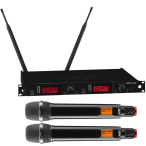
LD Systems is widely recognized for column array speakers and portable PA equipment, but its U500 wireless microphone systems are also standout performers. The LD Systems U504.7 HHD2 includes two handheld transmitters and a true-diversity dual-channel receiver with automatic scanning, infrared synchronization, selectable transmitter power, and clear OLED displays.
KPODJ tested the U504.7 platform directly against a Shure SLX-D system costing roughly twice as much. Everyone present for the comparison—including the owner of the Shure system—preferred the LD Systems unit. Based on that experience, we consider the U500 series an exceptional choice for customers who want professional wireless performance, convenient multi-channel operation, and outstanding value.
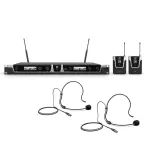
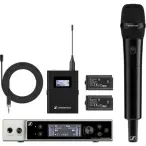
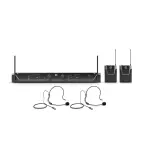
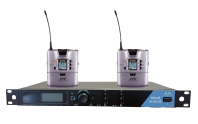
LD Systems also offers dual bodypack and headset configurations for instructors, presenters, fitness applications, theater, and houses of worship. Mixing transmitter styles can be useful when one event requires handheld microphones for audience questions and bodypacks for primary presenters.
Accessories for Larger Wireless Systems
A complete multi-channel wireless rig may require a rack case, power conditioning, short audio cables, rechargeable batteries, charging stations, antenna distribution, remote antennas, bodypacks, replacement capsules, or identification rings. Browse wireless microphone components when expanding or organizing your system. Because channel count, frequency compatibility, and transmitter selection can become complicated, contact KPODJ for help designing a multi-microphone system that remains reliable, portable, and easy to operate.