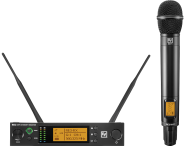
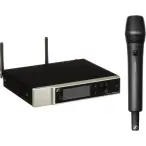
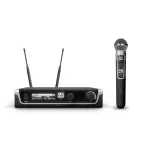
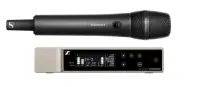
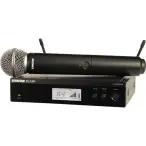
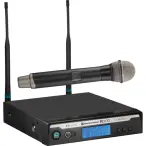
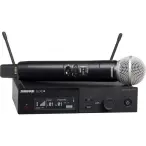
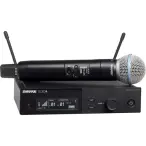
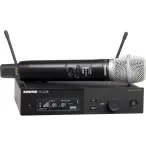
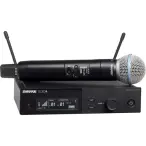
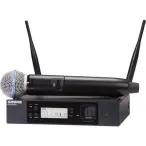
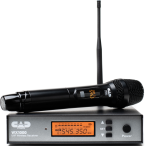
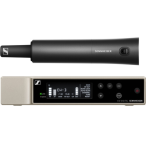
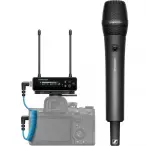
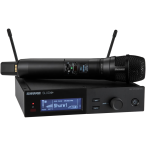
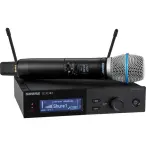
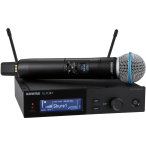
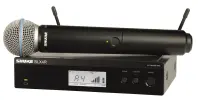
Wireless Handheld Microphone Systems
Wireless handheld microphone systems give mobile DJs, vocalists, presenters, and event professionals the freedom to move without being tied to a microphone cable. At weddings, corporate events, houses of worship, school functions, and live performances, that freedom is more than a convenience, it can be essential for speeches, announcements, audience interaction, and energetic vocal performances.
Choosing the right wireless mic requires more than comparing sound quality and price. Local RF activity can make one frequency band perform better than another, and even an excellent system may struggle in a congested band. The KPODJ team can help evaluate available frequency ranges for your area and recommend a dependable wireless handheld microphone that matches your application, channel requirements, performance expectations, and budget.
Choosing the Right Wireless Handheld Microphone
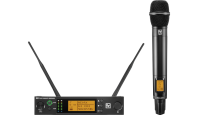
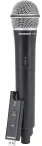
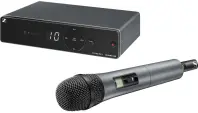
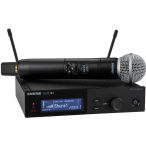
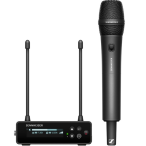
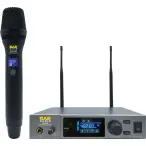
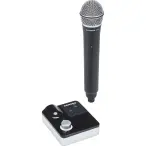
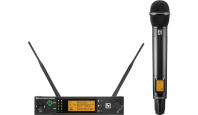
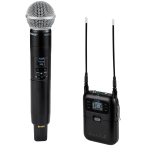
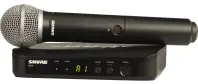
A wireless handheld mic system normally includes a handheld transmitter with an integrated microphone capsule and a receiver that connects to a mixer, powered speaker, or installed sound system. These systems are popular because they are familiar to performers and presenters, easy to pass from one person to another, and simple to integrate into mobile production systems.
The best system depends on how and where it will be used. A wedding DJ making introductions has different requirements than a singer performing beside loud stage monitors. Corporate presenters may prioritize straightforward operation and clear speech reproduction, while production companies managing several wireless microphones need dependable frequency coordination, wider tuning ranges, and efficient rack mounting.
Frequency Range and RF Reliability
At KPODJ, we consider frequency compatibility one of the most important parts of selecting any UHF wireless microphone system. Available spectrum and local interference vary by location. Television transmitters, nearby venues, other wireless microphones, and additional RF devices can all affect performance. Buying an expensive wireless mic in the wrong frequency band may create more problems than choosing a more affordable system operating in a cleaner range.
Automatic channel scanning and infrared frequency synchronization can simplify setup, but they do not eliminate the need to choose an appropriate band. Operators using multiple channels should also consider tuning bandwidth, compatible-frequency capacity, receiver filtering, transmitter power, and frequency-coordination features. KPODJ representatives can help identify the most suitable frequency options for your operating area before you purchase.
JTS Wireless Microphones: Factory-Direct Value
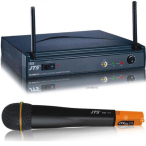
JTS wireless microphone systems are among our favorite recommendations for customers who care more about performance and value than brand-name recognition. JTS is one of the industry’s largest microphone manufacturers, although many buyers are unfamiliar with the name because the company has produced microphones and components associated with other, more widely recognized brands.
In our opinion, purchasing a JTS microphone is similar to buying closer to the source. Instead of paying primarily for a familiar logo and a large marketing budget, customers receive professional RF technology, durable construction, and strong microphone performance for the money. This makes JTS especially appealing to mobile DJs, production companies, houses of worship, schools, theaters, and venues that need multiple dependable wireless channels without overspending.
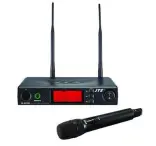
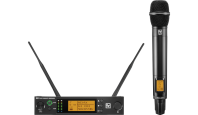
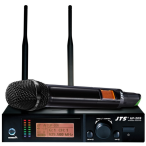
The JTS IS-R2/JSS-4B dual wireless system provides two handheld microphones in a convenient dual-channel format. For more demanding professional applications, the JTS UF-20R/JSS-20 offers an expansive frequency selection, advanced synchronization, and a platform designed for larger multi-channel wireless systems. JTS also offers four-channel solutions for productions that need to maximize channel count while minimizing rack space.
LD Systems U500: A Standout Wireless Mic Value
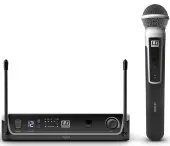
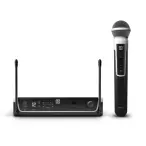
LD Systems is best known by many event professionals for its column array speakers, portable PA systems, and compact sound reinforcement products. However, the company’s U500 wireless microphone series deserves serious attention. The LD Systems U504.7 HHD is a true-diversity UHF wireless handheld system with automatic channel scanning, infrared synchronization, selectable transmitter power, an OLED display, and a rugged handheld microphone.
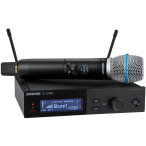
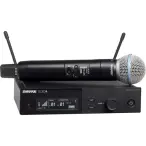
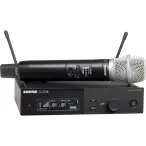
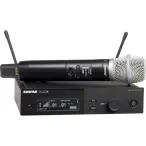
KPODJ directly compared the LD Systems U504.7 with a Shure SLX-D system that cost roughly twice as much. During our side-by-side listening test, everyone present—including the owner of the Shure system—preferred the LD Systems unit. That result made the U504.7 one of our strongest wireless microphone recommendations for buyers seeking professional sound and RF performance without paying primarily for a more recognizable brand name.
For applications requiring two handheld microphones, the LD Systems U504.7 HHD2 combines two transmitters with a dual-channel receiver. LD Systems also offers bodypack, lavalier, and headset configurations, making the U500 platform suitable for singers, presenters, instructors, theatrical productions, houses of worship, and corporate events.
Microphone Capsules, Channel Counts, and Accessories
The microphone capsule affects vocal tone, handling noise, feedback resistance, and how consistently the mic performs when held at different distances. Cardioid dynamic capsules are popular for DJs, speeches, karaoke, and general live vocals because they are durable and forgiving. Tighter pickup patterns can provide additional isolation on loud stages, but they require better microphone technique and careful monitor placement.
A single-channel receiver may be sufficient for an officiant, solo performer, or mobile DJ who needs one dependable mic. Dual wireless handheld systems simplify setup when two microphones are used regularly, while larger productions should explore multi-channel wireless microphone systems that support future expansion.
Useful Wireless Microphone Accessories
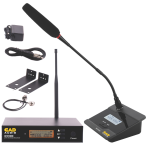
Rechargeable batteries, charging stations, protective cases, rack shelves, replacement capsules, microphone clips, identification rings, antenna distribution systems, and remote antennas can improve reliability and simplify operation. Browse wireless microphone components when building or expanding a complete system. Because specifications do not always reveal how a wireless mic will perform in the real world, contact a KPODJ representative for help comparing JTS, LD Systems, frequency bands, capsules, channel counts, and accessories for your application.